Instructional Designer

I design training that people actually want to complete.

Blending learning science with creative design to build experiences that stick — from interactive e-learning to game-based toolkits for corporate and education teams.


Selected Work

Projects & Case Studies

Each project follows a process rooted in needs analysis, learner-centered design, and measurable outcomes.
Beauty Beyond Shades E-Learning

Beauty Beyond Shades

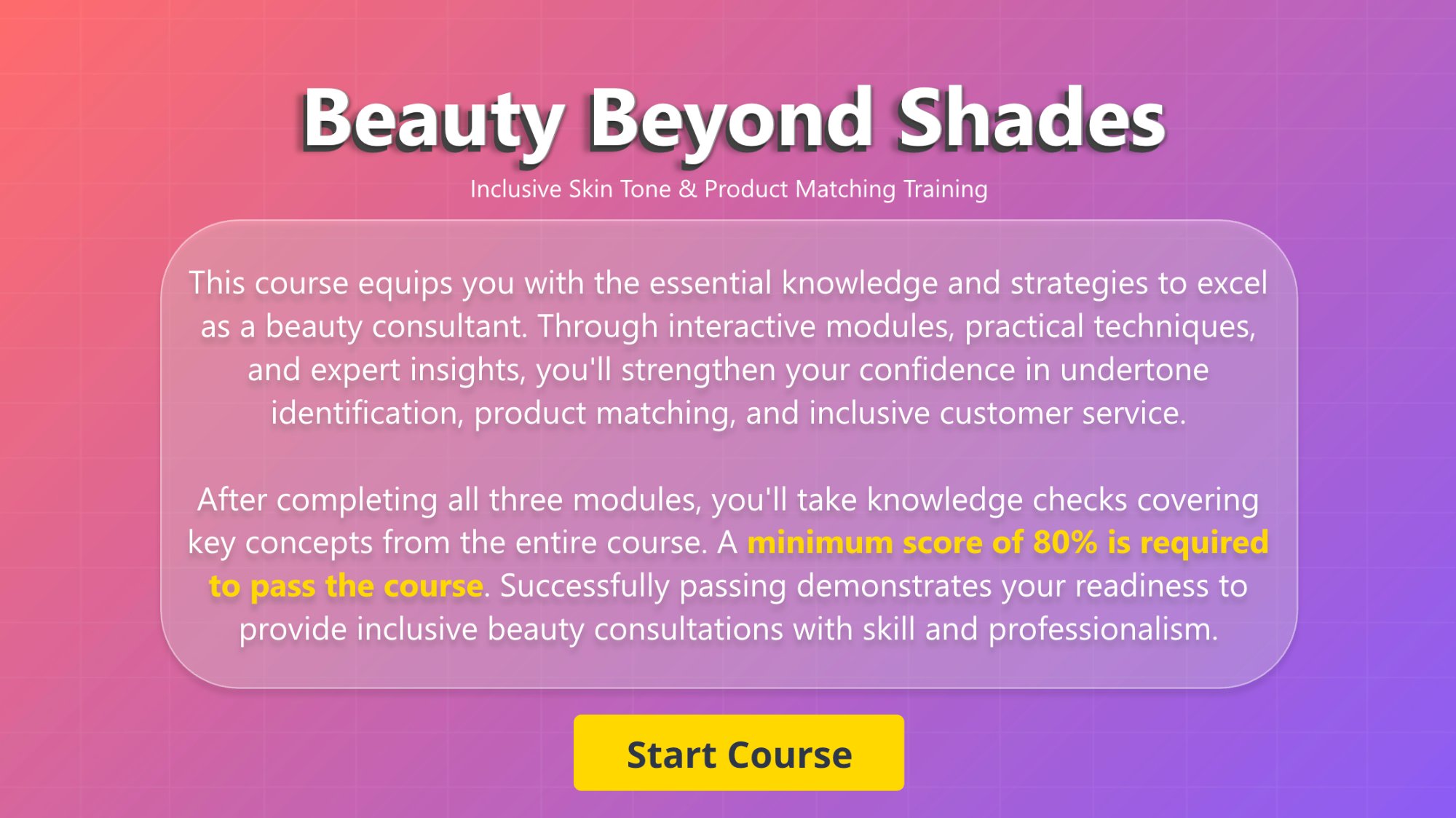
Created a three-module interactive e-learning experience in Articulate Storyline that trains beauty consultants to accurately identify diverse skin undertones — especially olive and deeper neutral tones.

View Case Study
Game-Based Teaching Toolkit Toolkit

Game-Based Teaching Toolkit

Developed a ready-to-implement resource that equipped educators with game-based learning strategies — resulting in measurably higher learner engagement and stronger knowledge retention across multiple training cohorts.

View Case Study
Leadership Training Simulation Simulation

Leadership Training Simulation

Designed a scenario-based simulation that immerses new managers in realistic workplace challenges — from managing underperformance to resolving team conflict — building confidence through branching decisions and immediate feedback.

View Case Study
Audio Insights Podcast Audio / Reflection

Audio Insights from My ILDT Journey

Produced a multi-episode reflective audio series that bridged instructional design theory with real-world application — helping peers and stakeholders understand evidence-based approaches to learning design.

View Case Study

About Me

Crystal Michelle

Crystal Michelle

Designing learning that works — for real people, in real contexts.

I'm an Instructional Designer with a background spanning both corporate and higher education. I specialize in creating on-demand, instructor-led, and blended training solutions that meet learners where they are.

My approach is rooted in learner-centered design and driven by data. I love turning complex content into clear, engaging experiences — whether that's a self-paced e-learning module, a game-based activity, or a full training curriculum.

I'm passionate about educational technology, inclusive design, and collaborating with cross-functional teams to create learning that actually moves the needle.


Expertise

Tools & Skills

The technologies and methodologies I use to bring learning experiences to life.

Authoring & Design

  • Articulate Storyline & Rise
  • Adobe Captivate
  • Canva & Adobe Creative Suite
  • Camtasia & Audacity
  • H5P Interactive Content

Design Methodology

  • ADDIE & SAM Models
  • Backward Design (Wiggins & McTighe)
  • Bloom's Taxonomy
  • Universal Design for Learning
  • Game-Based Learning Design

Platforms & Tech

  • LMS Admin (Canvas, Blackboard, Moodle)
  • SCORM & xAPI Standards
  • Google Workspace & Microsoft 365
  • Data Analysis & Learning Analytics
  • Accessibility & Section 508

Let's Connect

Looking for an instructional designer?

I'd love to hear about your project. Whether you're building training from scratch or rethinking what you have — let's talk.
Toolkit

Game-Based Teaching Toolkit

Role Instructional Designer
Audience K-12 & Higher Ed Educators
Tools Canva, Heyzine, Research-based Frameworks

The Problem

Many educators want to incorporate game-based learning into their teaching but lack the practical resources, frameworks, and confidence to do so effectively. Without structured guidance, game-based strategies often feel like add-ons rather than meaningful learning tools — resulting in low adoption and inconsistent outcomes.

The Solution

I designed a comprehensive, ready-to-implement toolkit that gives educators everything they need to integrate game-based learning into their instruction with confidence. The toolkit bridges theory and practice by providing research-backed strategies alongside actionable templates, activity guides, and implementation tips.

  • Research-grounded framework connecting game mechanics to specific learning objectives
  • Plug-and-play activity templates adaptable across subjects and grade levels
  • Step-by-step facilitation guides for both in-person and virtual environments
  • Assessment rubrics to measure learner engagement and knowledge retention

Key Features

The toolkit was designed as an interactive flipbook to make it visually engaging and easy to navigate. Educators can browse by learning objective, game type, or implementation time — making it practical for busy professionals who need solutions they can apply immediately.

Results

Educators who adopted the toolkit reported higher learner engagement and stronger knowledge retention across their courses. The resource was adopted across multiple training cohorts and continues to serve as a go-to reference for instructors looking to make learning more interactive and effective.

Launch the Toolkit

Audio / Reflection

Audio Insights from My ILDT Journey

Role Content Creator & Instructional Designer
Audience ID Professionals & ILDT Peers
Tools Audacity, Canva, Podcast Hosting

The Problem

Instructional design theory can feel abstract and disconnected from day-to-day practice — especially for students and early-career professionals navigating complex frameworks for the first time. Traditional written reflections don't always capture the nuance of the learning process or make the content accessible to a broader audience.

The Solution

I produced a multi-episode reflective audio series that documents my journey through the Instructional Learning Design & Technology (ILDT) program. Each episode unpacks a specific module or concept — connecting academic theory to real-world instructional design practice in a conversational, approachable format.

  • Episode-by-episode breakdown of key ILDT concepts and frameworks
  • Personal reflections connecting coursework to professional practice
  • Insights on educational technology, personalized learning, and learner experience design
  • Accessible audio format designed for busy professionals and fellow learners

Key Features

Each episode was carefully scripted and produced to balance personal narrative with instructional value. The series covers topics including learning space design, activity engagement strategies, and the role of technology in modern instruction — making it both a personal portfolio piece and a learning resource for others.

Results

The series successfully bridged the gap between academic theory and applied practice, helping peers and stakeholders understand evidence-based approaches to learning design. It demonstrated competency in multimedia content production, reflective practice, and the ability to communicate complex ideas clearly — all critical skills for instructional designers.

Listen to the Episode

Audio Insights Podcast

🎧 My ILDT Journey

Simulation

Leadership Training Simulation: Navigating Workplace Challenges

Role Instructional Designer & Developer
Audience New Managers & Team Leads
Tools Scenario-Based Design, Game-Based Learning, ADDIE
Leadership Training Simulation Screenshot

The Problem

New managers often face significant challenges as they transition into leadership roles — particularly when it comes to managing underperformance and mediating team conflict. Many lack the practical experience to address declining performance in a way that's both constructive and empathetic, leading to avoidance, ineffective communication, missed deadlines, and frustration among team members.

Additionally, fostering inclusivity and collaboration is a struggle for leaders who haven't yet developed the interpersonal skills needed to create an environment where every team member feels valued. Left unresolved, these issues lead to disengagement, reduced productivity, and strained workplace relationships.

The Solution

I designed a comprehensive, interactive simulation that immerses participants in realistic workplace scenarios — such as addressing underperformance or mediating team conflicts — allowing them to practice decision-making in a safe, controlled environment. At key decision points, participants choose from multiple options, with each choice leading to branching outcomes that demonstrate the real impact of their actions.

  • Branching scenario design with multiple decision paths and realistic consequences
  • Virtual mentor providing ongoing guidance, reflective prompts, and best-practice reinforcement
  • Immediate feedback after each decision to highlight strengths and areas for improvement
  • Empathy-driven framework emphasizing active listening, inclusive communication, and diverse perspectives
  • Game-based design elements that keep participants engaged and motivated throughout

Key Features

The simulation goes beyond traditional leadership training by putting learners in the driver's seat. Rather than passively consuming content, participants actively navigate complex interpersonal situations — making choices, seeing consequences, and refining their approach in real time. The virtual mentor adds a layer of personalized support, helping participants build self-awareness and understand how to apply leadership principles effectively.

The emphasis on empathy and inclusive leadership teaches participants how to foster collaboration, listen actively, and create an environment of trust and respect — skills that are critical for driving team morale and productivity.

Results

Participants who completed the simulation demonstrated measurable improvement in decision-making, conflict resolution, and empathetic communication. The hands-on format allowed learners to practice leadership in a risk-free environment — making mistakes, learning from them, and refining their approach before applying skills with real teams.

The program equipped new managers with the confidence, knowledge, and practical skills needed to navigate workplace challenges, improve team dynamics, and lead with both effectiveness and compassion.

Launch the Simulation

E-Learning

Beauty Beyond Shades

Role Instructional Designer & Developer
Audience Beauty Consultants & Retail Staff
Tools Articulate Storyline, Canva, ADDIE Model
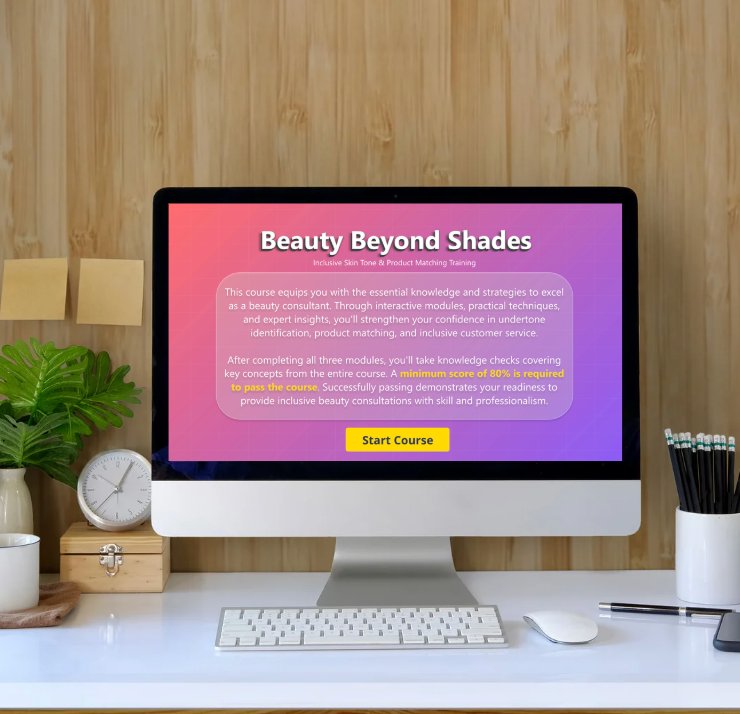
Beauty Beyond Shades Desktop Mockup Beauty Beyond Shades Course Screenshot

The Problem

Beauty consultants often struggle to accurately identify diverse undertones — especially olive, neutral, and deeper cool tones — which leads to mismatched products and customers feeling overlooked or misunderstood. This gap in training results in a less inclusive beauty experience and missed opportunities to build client trust.

The Solution

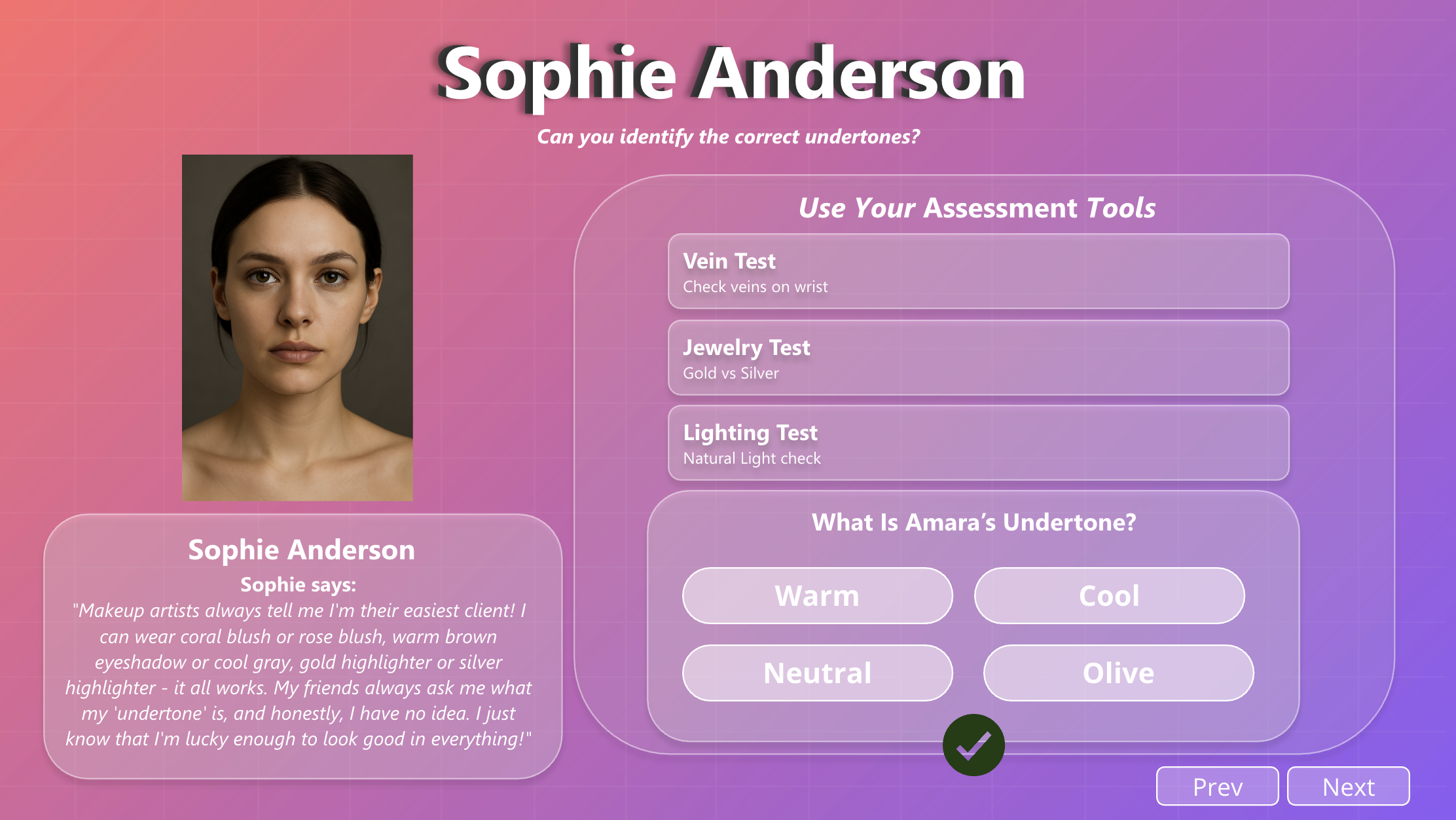
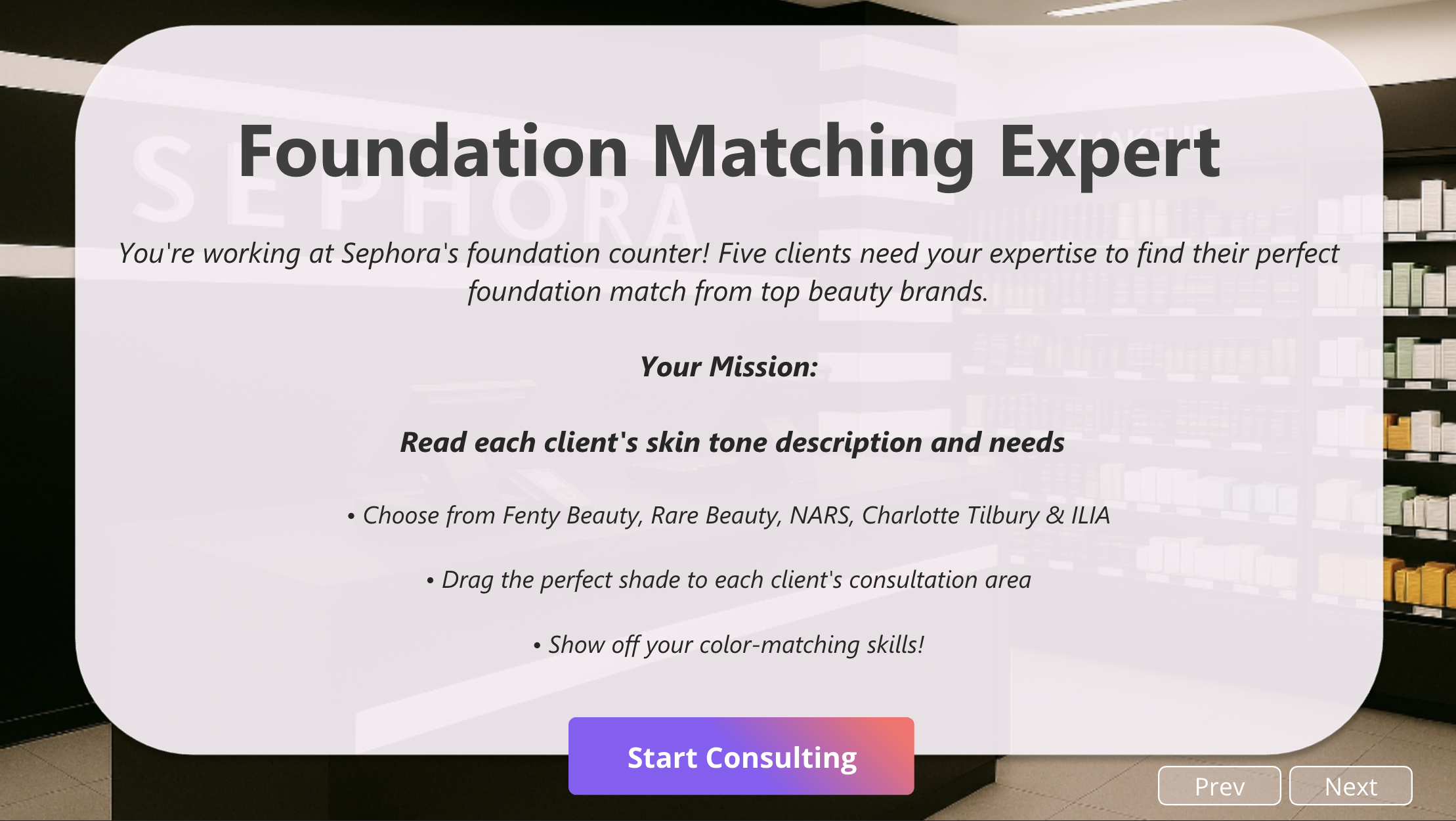
I designed and developed a three-module interactive e-learning experience that builds knowledge and confidence in undertone analysis and inclusive foundation matching. The course combines clear explanations, guided examples, and ethical decision-making prompts so learners gain a deeper understanding of how to approach consultations with care, respect, and representation.

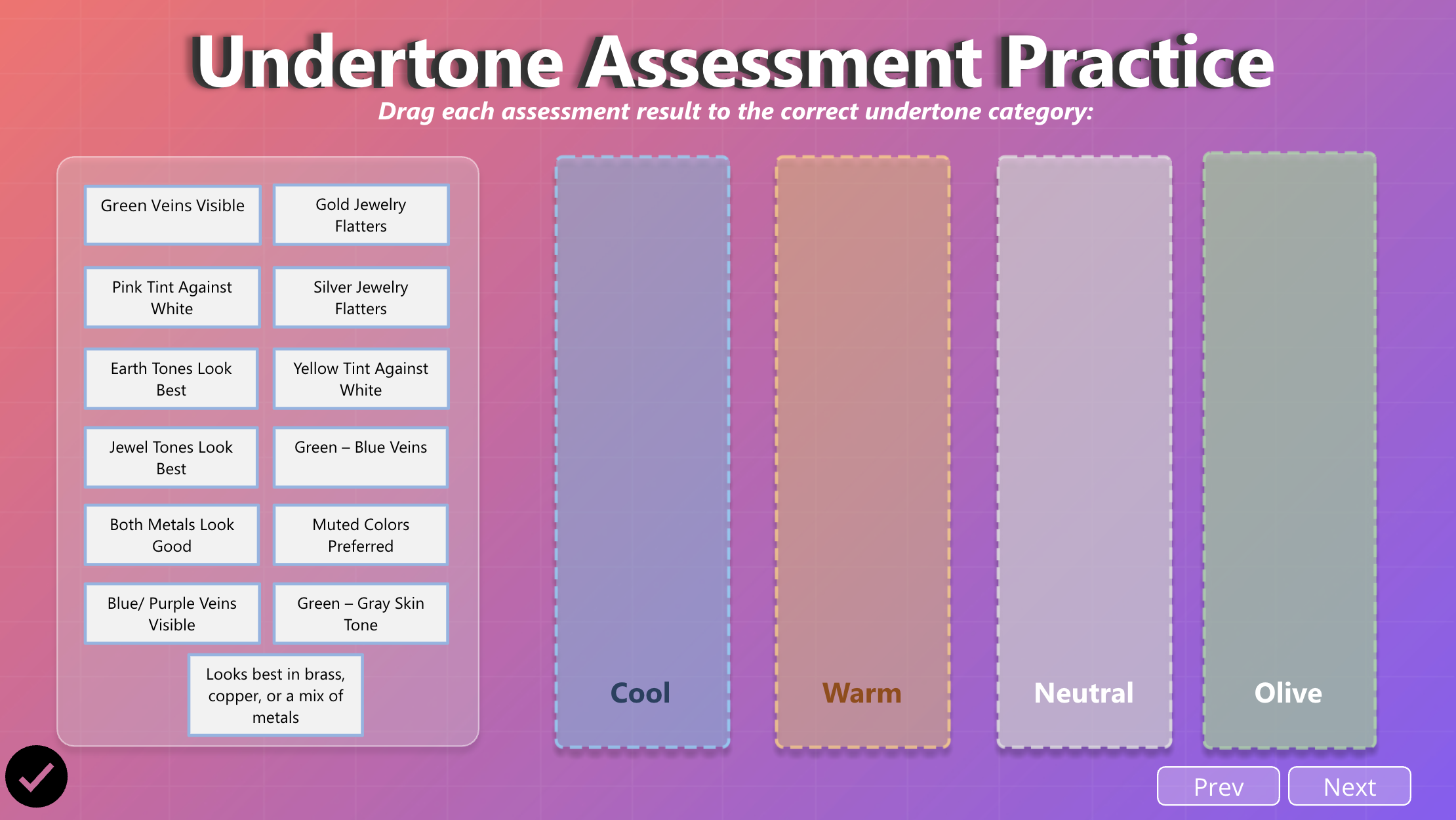
  • Drag-and-drop undertone sorting activities for hands-on skill building
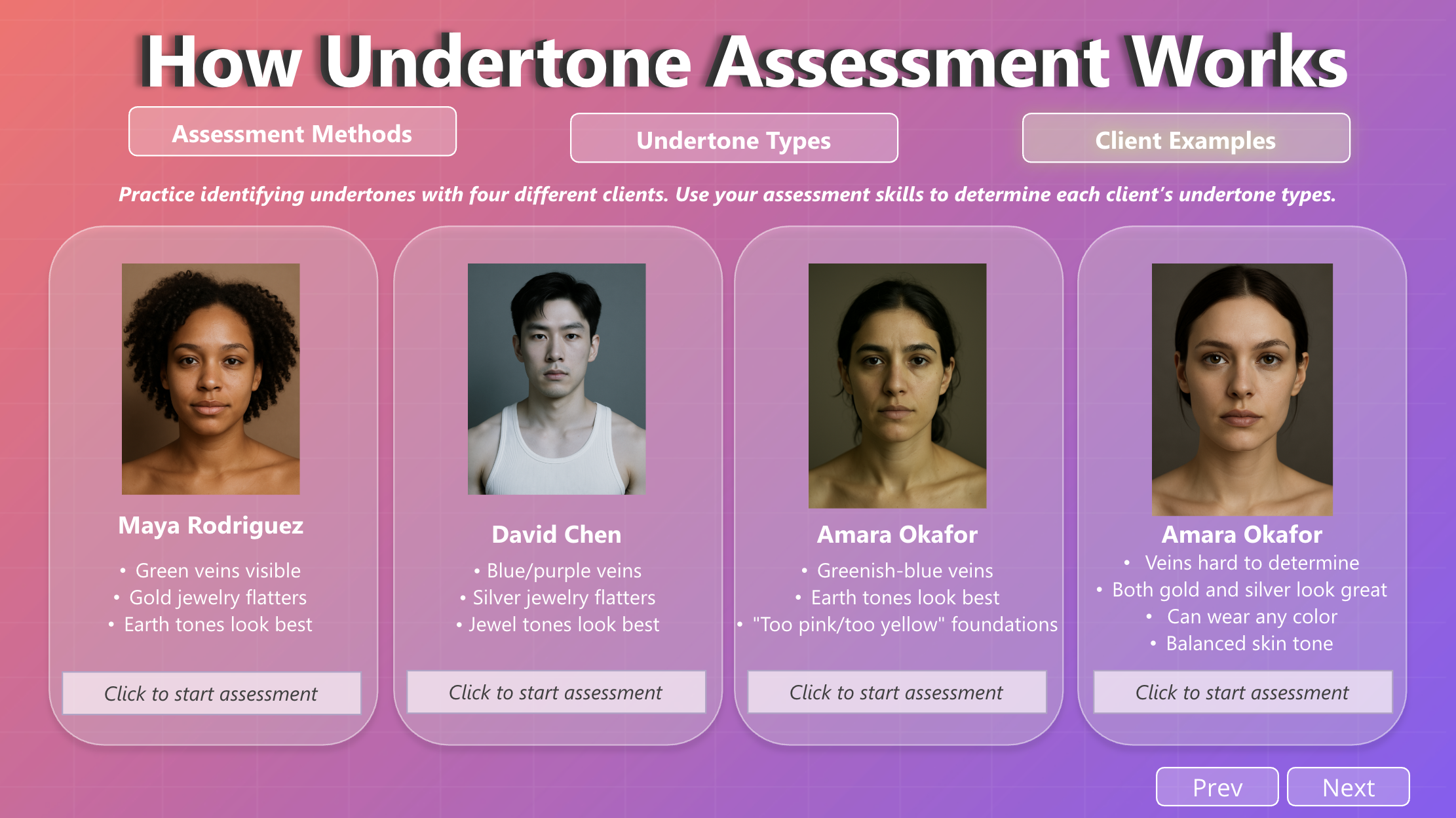
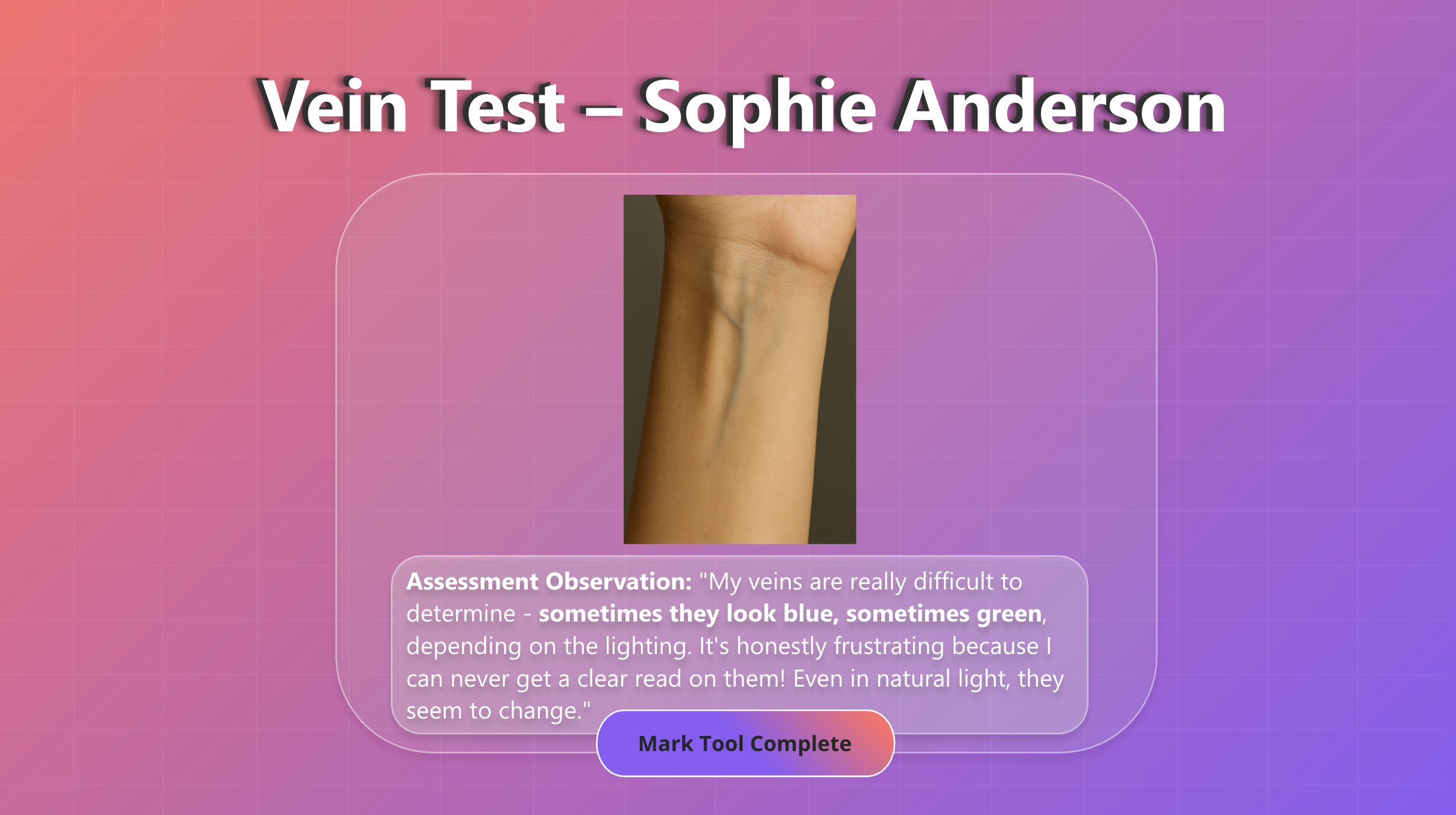
  • Realistic client assessment scenarios under different lighting conditions
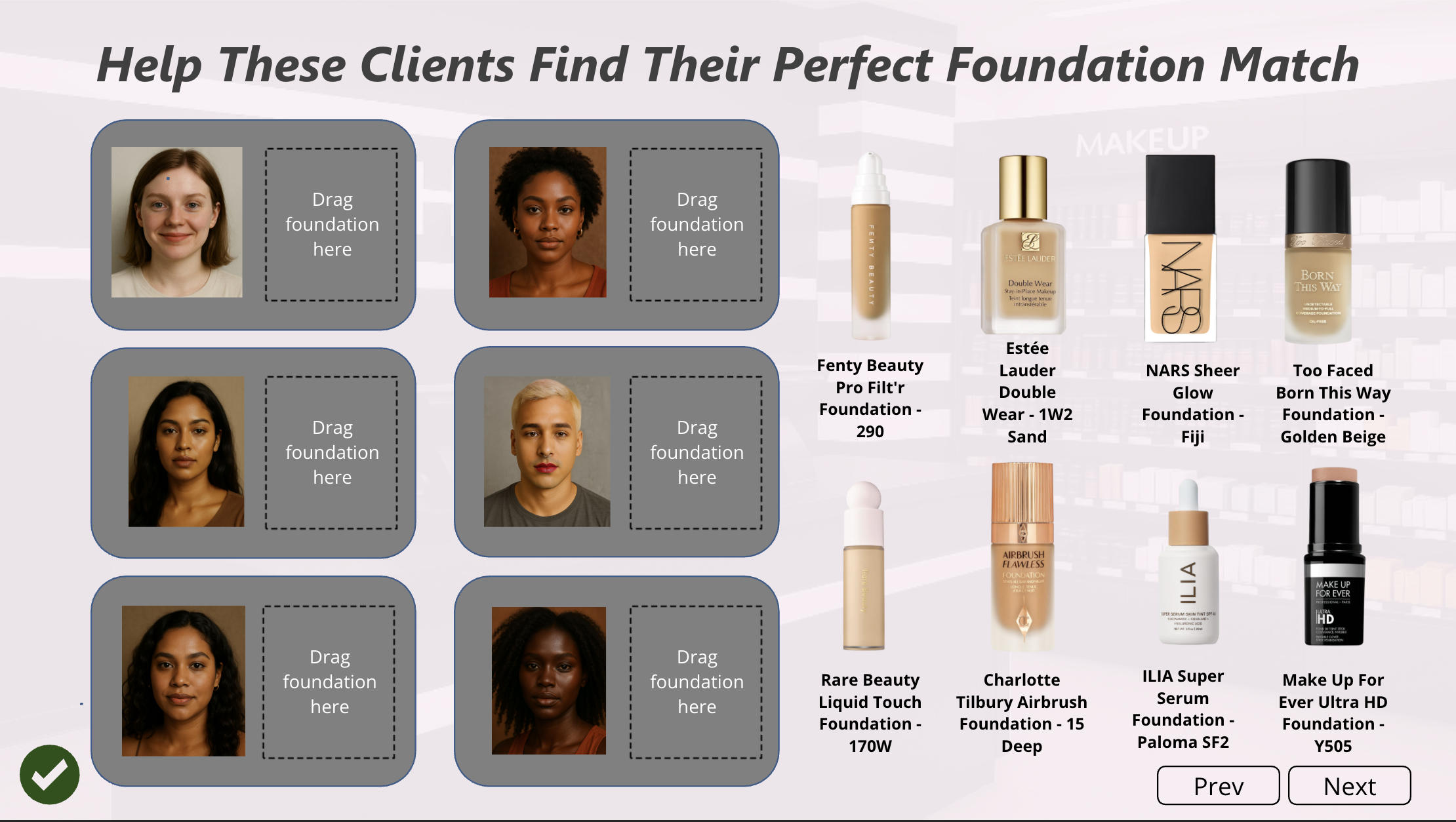
  • Virtual foundation-matching simulations using major beauty brands
  • Real "beauty counter confessions" for reflective practice and professional growth
  • Ethical decision-making prompts covering budget sensitivity, preferences, and bias awareness

Key Features

The course goes beyond memorizing color theory. Learners practice asking thoughtful questions, listening to client needs, and honoring preferences around finish, coverage, and budget. The interactive activities mimic real retail environments so consultants can build muscle memory before working with actual clients. Throughout the program, the focus is not only on what looks right — but what feels right for each person sitting in that chair.

Results

Learners who completed the program demonstrated significantly improved accuracy in shade matching, stronger communication with diverse clients, and increased readiness to deliver inclusive beauty consultations. Assessment data from interactive scenarios showed improved decision-making and stronger product knowledge. Participants reported feeling more confident guiding clients through the shade-matching process — leading to fewer mismatched recommendations, greater customer satisfaction, and a more professional approach to beauty where every client feels seen and understood.

Launch the Course